Tips & Guides Hub

Guides for Deep Draft Strategy & Tactical Gameplay

Level up your fantasy strategy game performance with structured game guides focused on drafting mechanics, tactical gameplay, and competitive strategy. Designed for Hungary-based players who want reliable, tournament-ready knowledge for a premium cross-platform multiplayer fantasy game.

Browse focused breakdowns, from resource management fundamentals to analyzing professional drafts.

Drafting Mechanics

Ultimate Drafting Guide

Dive deep into the heart of fantasy strategy with a comprehensive walkthrough of the drafting phase, covering best practices, timing, and counter-picks.

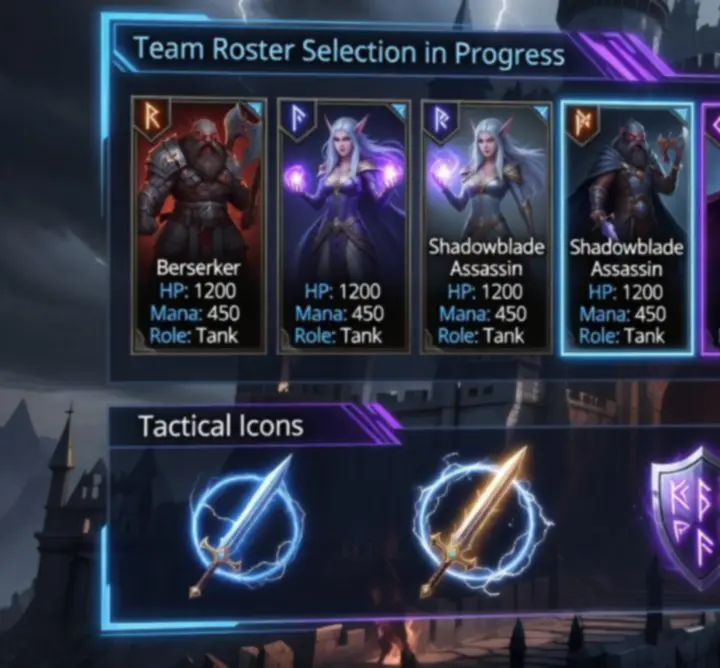
Fantasy strategy game drafting interface with hero cards and tactical options

The drafting phase is where fantasy strategy game matches are often decided before the first spell is cast. Treat it as a tactical puzzle: every pick defines your team identity, counters enemy options, and sets your win conditions.

Structured Drafting Checklist

  • Lock in a frontline anchor within the first two picks to stabilize your composition.
  • Secure at least one scaling damage dealer and one early pressure hero.
  • Prioritize crowd control and disengage tools before niche comfort picks.
  • Mirror the enemy: match their damage type balance and crowd-control density.

Timing Windows & Information Advantage

Drafts unfold in information waves. Early picks show your core game plan; late picks refine counters. Use your side of the draft:

  • First pick: Choose a flexible S-tier hero that fits multiple comps.
  • Second rotation: Reveal your frontline + backline pairing while denying a key synergy from the enemy.
  • Last pick: Save a niche counter to enemy carries or their main engage tool.

Combine these concepts with the detailed phase breakdown in the Drafting Strategies section to build a repeatable, high-win-rate draft routine.
Team Composition

Hero Synergy & Team Composition

Build powerful teams by combining hero abilities, class strengths, and elemental affinities to create winning synergies across competitive play.

Synergy-driven drafts outperform raw mechanical skill at most ranks. Define a team identity first, then draft heroes that reinforce it. Common identities in this multiplayer fantasy game include dive, poke, zone control, pick comp, and scaling front-to-back.

Synergy Framework

  • Class synergy: Pair control-heavy tanks with burst assassins, or sustain tanks with DPS mages and marksmen.
  • Elemental synergy: Stack complementary elements (e.g., Frost for slows + Arcane for burst) to lock enemies in lethal zones.
  • Cooldown synergy: Chain ultimates so each major cooldown creates a decisive objective window.

Composition Health Check

Before locking your last pick, verify:

  • At least one reliable engage tool and one peel option.
  • Mixed damage profiles to avoid easy armor or magic resist stacking.
  • Wave clear and objective control for neutral fights and sieges.

For more specific hero-by-hero pairings, continue in the Characters / Classes section where we list ideal partners and counter-pairs.

Tactical Gameplay

Advanced Tactical Maneuvers

Uncover high-level tactics such as fog-of-war manipulation, zone control, and unit flanking for outmaneuvering rivals during key battle moments.

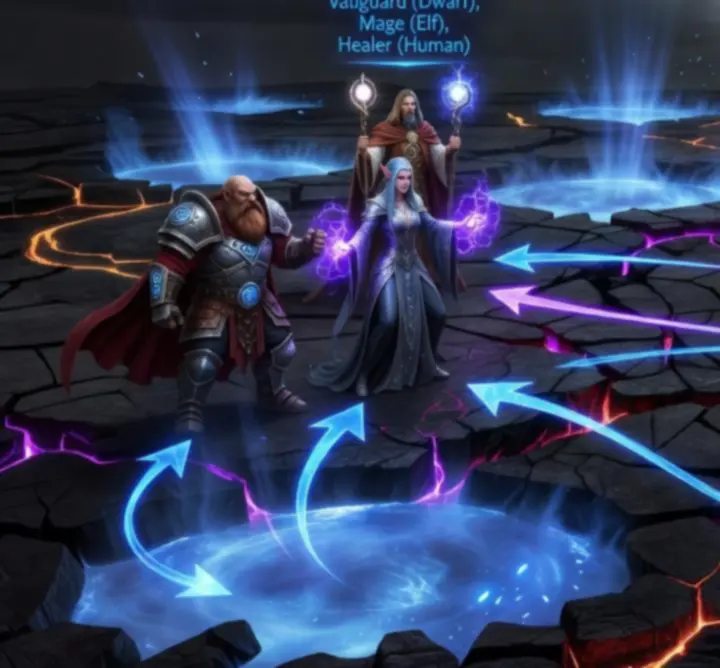
Dark fantasy tactical battle scene with heroes clashing on a glowing map

Once the draft is locked, execution decides everything. Top players use fog-of-war control, pathing tricks, and layered zone denial to generate favorable fights instead of relying purely on raw mechanics.

Fog-of-War Manipulation

  • Stagger your vision wards to create overlapping safe corridors for rotations.
  • Path through unexpected angles to turn predictable 5v5s into surprise picks.
  • Leave intentional vision gaps to bait overextensions around key objectives.

Zone Control & Flanking

Build comps that can threaten multiple zones simultaneously: front line holds choke points while flankers threaten carries from the side. Coordinate cooldowns so your zone control spells layer instead of overlapping wastefully.

Deepen your tactical understanding in the Gameplay & Mechanics page, where we cover targeting rules, elevation, and terrain advantages.

Economy & Cooldowns

Resource Management Fundamentals

Master the art of managing gold, action points, and cooldowns for sustained strategic advantage throughout matches.

Strong drafts crumble when players mismanage gold, mana, and cooldowns. Treat resources like a shared economy; every trade should move your entire team closer to an objective or power spike.

Gold & Itemization

  • Sync recall timings so at least two allies spend gold before major objectives.
  • Prioritize core item spikes for your primary carry before buying luxury defensive options.
  • Adapt your build path to enemy composition instead of following a static guide every game.

Cooldown Trading

Track key enemy ultimates; forcing them defensively lets you claim map control on the next wave. Use low-cost abilities to probe for cooldowns, then commit major ultimates only when you know the opponent cannot answer.

Competitive Strategy

Competitive Ladder Progression

Strategies for efficiently climbing the ranked ladder, including counter-meta drafting, skill improvement, and adapting to player trends.

Climbing the ranked ladder on PC or mobile in Hungary requires more than raw game knowledge. You need a structured routine for drafts, champion pools, and review.

Ranked Mindset & Pool Design

  • Limit your hero pool to 2–3 core picks per role with overlapping itemization and playstyles.
  • Prepare at least one off-meta comfort pick that punishes common ladder mistakes.
  • Adjust your draft approach based on time of day and typical opponent tendencies in the Hungary region.

Counter-Meta Drafting

Track patch notes and community discussions in the News / Updates section. When a new meta emerges, identify the most popular archetype and design a specific anti-comp with strong early skirmish tools, hard crowd control, and reliable disengage.

Drafting Mechanics

Counter-Drafting Strategies

Tips for disrupting enemy team builds and making game-defining draft decisions that limit your opponent’s strengths.

Counter-drafting is about removing options more than showcasing your favorite heroes. Every pick should either deny a synergy, blunt an enemy strength, or force awkward itemization.

Identify Enemy Win Conditions

  • Spot whether they rely on one hyper-carry, wombo-combo ultimates, or poke and siege.
  • Draft disengage vs hard dive, sustain vs poke, or burst vs immobile scaling comps.
  • Pick tanks that resist their primary damage type and supports that break their engage patterns.

Use these patterns alongside the Overview and Drafting Strategies pages to design counter-draft trees you can follow under time pressure.

Hero Mastery

Hero Class Mastery

In-depth breakdowns of each hero class, detailing optimal roles, late-game power spikes, and high-impact combinations.

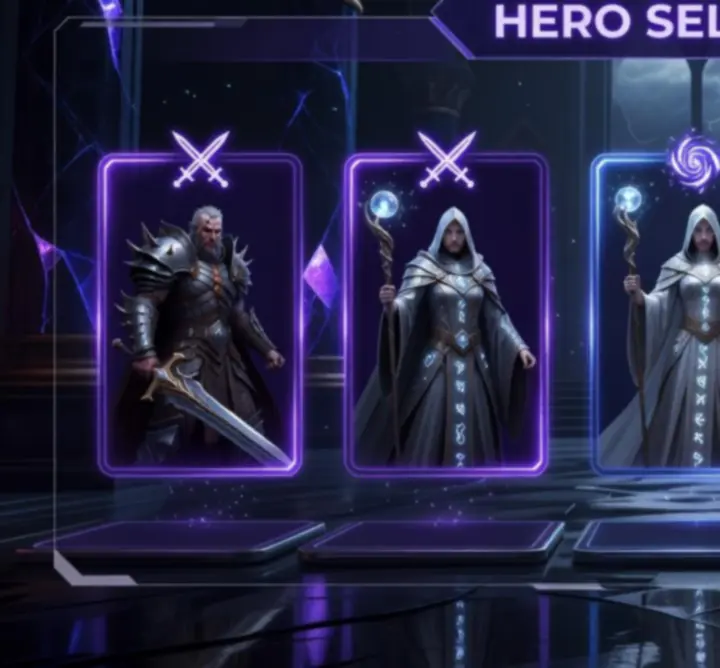
Hero class selection cards in a dark fantasy drafting interface

Class mastery turns good drafts into unstoppable win conditions. Tanks, supports, assassins, mages, and marksmen each have distinct lane priorities, roaming patterns, and late-game spikes.

Class Identity Highlights

  • Tanks: Peak during mid-game objectives; draft them early to hide your carry picks.
  • Assassins: Excel against backline-heavy comps with limited vision control.
  • Mages & Marksmen: Anchor front-to-back fights, but require layered peel and strong frontlines.
  • Supports: Decide whether your comp leans into hard engage or disengage & peel.

Continue to the Characters / Classes page for hero-specific builds, runes, and recommended item paths.

Draft Depth Frameworks

Draft Depth Gameplan Templates

Ready-to-use strategy templates for aggression, defense, hybrid, and control—plus how and when to pivot during drafts.

To speed up decision-making, prepare gameplan templates you can snap into as the lobby loads. Each template outlines pick priorities, objective focus, and expected power spikes.

Core Template Archetypes

  • Aggression: Early skirmish power, dive tools, and snowball potential. Aim to end before 30 minutes.
  • Defensive: Wave clear, disengage, and scaling carries. Trade early objectives for guaranteed late-game scaling.
  • Hybrid: Flexible comps that can pivot between pick potential and front-to-back teamfighting.
  • Control: Zone denial and objective setups that force enemies into disadvantageous terrain.

As picks develop, choose whether to double down on your initial template or pivot into a safer hybrid approach based on enemy crowd control and scaling.

Draft Philosophy

Defensive vs. Aggressive Drafts

Weigh the pros and cons of prioritizing durable picks versus burst-damage heroes, and know when to switch up your approach based on the opposition.

Many teams in Hungary’s ranked ladder default to comfort picks, leading to accidental hyper-aggressive or overly passive drafts. Consciously choose your side of the spectrum instead of drifting into it.

When to Draft Aggression

  • Enemy comp relies on late-game scaling or greedy item curves.
  • Your team excels at early skirmishes and objective snowballs.
  • Map features strong early neutral objectives that reward tempo.

When to Draft Defense

  • Opponents have limited siege tools and struggle to end games.
  • Your carries outscale their counterparts significantly at 3+ items.
  • You’re on a losing streak and want a forgiving, low-variance composition.

Mix both philosophies in best-of series: start aggressive to test opponents, then pivot into controlled, defensive drafts once you understand their tendencies.

Esports Insights

Analyzing Professional Drafts

Review iconic competitive draft scenarios, highlighting decision-making, adaptation, and lessons you can apply to your own gameplay.

Professional matches showcase the highest level of drafting mechanics and tactical gameplay. Instead of just copying picks, study why teams choose specific heroes, bans, and side selections.

How to Break Down a Pro Draft

  • Note early bans and what they reveal about targeted players or feared strategies.
  • Track how each pick contributes to crowd control, engage, and objective control.
  • Observe adaptation game-to-game in a series as teams counter each other’s core compositions.

Apply these lessons to your own ranked games: treat every lobby like a mini best-of series, adapting your fantasy strategy game approach based on previous encounters with recurring opponents in the Hungary region.

Stay tuned to the News / Updates page for breakdowns of major esports events and patch-driven meta shifts that impact your Draft Depth game plans.

Next Steps: Put Your Knowledge Into Play

You’ve explored the core Draft Depth guides—from drafting theory to on-field tactics. Lock in your understanding by testing builds, experimenting with compositions, and sharing feedback with other players.