Champions, Classes & Draft Depth

Characters & Classes for Maximum Draft Depth

This Draft Depth hub focuses on Teamfight Tactics (TFT) – Riot Games' premium cross-platform multiplayer fantasy strategy game built entirely around drafting mechanics, tactical positioning and evolving competitive strategy. Here you can explore how every champion, trait and class feeds into layered tactical gameplay decisions.

All information is tailored for Hungary-based players looking for reliable, up-to-date insights into TFT's roster, builds and meta trends.

Role Archetypes Explained

Core Class Roles in TFT: From Tanks to Controllers

Understanding fantasy role archetypes is the fastest way to build stable drafts under pressure.

Tanks – Frontline Anchors

Tanks absorb damage, buy time and shape the pace of fights. In TFT, these are champions with high base health, strong resistances and defensive traits or items (for example, Vanguard-style armor, Bruiser health scaling or Guardian shields).

  • Positioned on the front two rows to catch aggro and protect carries.
  • Best paired with mitigation items and crowd-control (CC) skills.
  • Key to stabilising streaks during mid-game in competitive lobbies.

Drafting tip: in Hungary's higher-ranked queues, players rarely win without at least two reliable tanks across early, mid and late game boards.

Damage Dealers – Carries & Glass Cannons

Damage dealers convert your economy and items into lethal pressure. They range from burst casters to sustained auto-attackers and hybrid slayers.

  • Placed safely in the backline or flanked behind tanks.
  • Rely on critical items and trait synergies to reach top-tier DPS.
  • Define your main win condition – protect them at all costs.

Drafting tip: never commit items to a carry that conflicts with the items you naturally roll; adapt damage dealers to your drops, not the other way round.

Supports & Healers – Buff, Sustain, Enable

Support units bring shields, healing, resistances, mana, or attack-speed buffs. In TFT, even one premium support piece can turbo-charge a whole board and reshape late-game lobbies.

  • Amplify your main carry's damage through buffs and debuffs.
  • Provide clutch heals and shields that decide close rounds.
  • Often flexible splash picks that complete trait thresholds.

Drafting tip: Hungary's tournament data shows drafts with at least one high-impact support spike significantly higher in top-4 conversion rates.

Controllers – Crowd Control & Disruption

Controllers disrupt enemy patterns through stuns, knock-ups, disarms or massive zoning ultimates. They decide who gets to play the fight and for how long.

  • Frequently drafted as utility picks to counter popular carries.
  • Benefit from mana and ability power items to chain CC.
  • Synergise with tanks by locking enemies into your frontline.

Drafting tip: controllers are the backbone of counter-drafts: pick them late in the draft phase after scouting enemy boards.
Draft Synergy

Draft Synergy: Building the Perfect Team

In TFT, good players pick strong champions; elite players draft connected boards that out-scale opponents over multiple rounds.

Draft Depth focuses on the hidden layers of synergy that define high-rank lobbies. Rather than chasing isolated power spikes, you draft toward cohesive trait webs and role coverage that stay stable across shop rolls.

1. Core Triangle: Tank, Carry, Support

Every competitive TFT comp in Hungary's ladder revolves around a simple triangle:

  • Tank: soaks focus fire and sets up CC.
  • Carry: converts item economy into win conditions.
  • Support: amplifies both survivability and damage.

If one side of the triangle is missing, your team collapses under pressure or fails to close fights.

2. Trait Lattices, Not Single Lines

Instead of chasing a single 6 or 8-piece trait at all costs, think in lattices – overlapping synergies that offer multiple pivot options when shops are unfriendly.

  • Open with flexible traits that can branch into at least two comps.
  • Draft units that belong to more than one viable tree.
  • Use augments and items to lock in the final direction only when ready.

3. Positioning-Based Synergy

Some of TFT's strongest interactions are based purely on board layout – aura ranges, unit targeting rules and backline angles.

  • Stack supports near your main carry to maximise buff uptime.
  • Corner your key damage dealer away from enemy assassins.
  • Use off-tank champions to intentionally manipulate aggro paths.

Hero Gallery

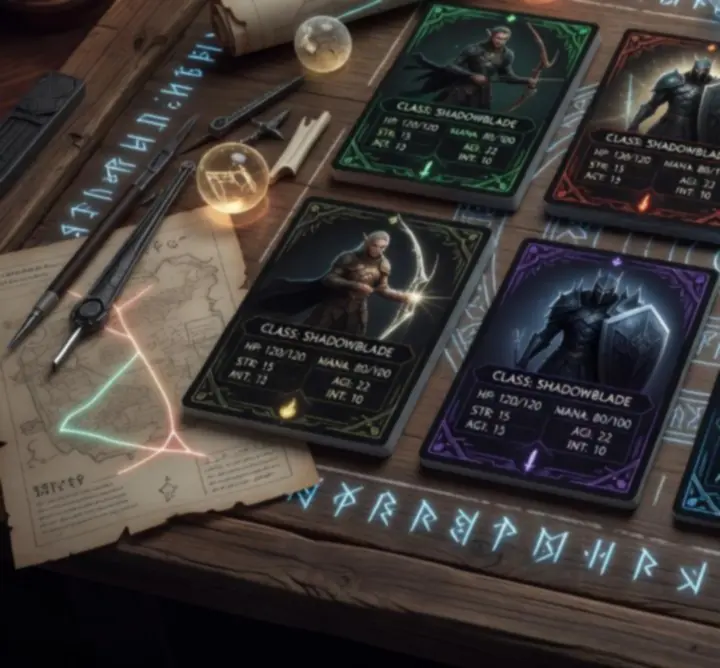
While TFT's roster rotates with each set, the archetypes of its champions remain stable. Use this gallery to recognise patterns quickly and draft them into your comps with confidence.

Class Breakdown

Tank, Damage, Support & Control – In-Depth Class Play

These breakdowns show how each class contributes to fantasy strategy game depth, and how to prioritise them during fast-paced draft phases.

Class Breakdown: Tanks

Tanks are more than meat shields. In TFT, the best tank line-up controls how enemy damage is distributed and which units survive long enough to cast.

  • Stack health and resistances on champions with reliable CC.
  • Use two lines of tanks to protect fragile backline carries from assassins.
  • Anchor your comp around a 2-star or 3-star premium tank in late game.

Hungary's competitive players often win by stabilising around a strong tank trio before spending heavily on flashy carries.

See Defensive Mechanics

Class Breakdown: Damage Dealers

Damage dealers include AP casters, AD marksmen and hybrid fighters. All share one truth: without correct itemisation and protection, they are wasted gold.

  • Decide early whether you are playing for burst or sustained damage.
  • Invest items on units with both strong traits and strong spell scaling.
  • Adapt to shop odds – sometimes a 2-cost carry with great items beats a contested 4-cost.

In a game defined by drafting mechanics, flexible carry selection is a major competitive edge.

Browse Carry Build Guides

Class Breakdown: Supports & Healers

Supports and healers are often under-drafted in lower ranks, but top Hungary players treat them as fight-deciding investments.

  • Prioritise units whose buffs scale with items or star levels.
  • Place them centrally so auras and heals cover your whole team.
  • Protect them from frontline spillover and assassin dives.

Modern TFT sets reward smart support drafting with massive increases in round-to-round consistency.

Learn Support Interactions

Drafting Counters

Drafting Counters – Neutralising Popular Picks

TFT may be a board game, but it plays like a card-based drafting duel: every champion you pick denies options to your opponents.

Scout, Don’t Guess

Use regular scouting to track which damage dealers and frontlines are contested. Counter-draft by:

  • Snapping up contested units only if they fit your trait lattice.
  • Pivoting to alternate carries when your first choice is over-contested.
  • Preparing controller units that directly disrupt enemy win conditions.

Role-Based Counter Patterns

Some counters are role vs. role rather than champion vs. champion:

  • Tanks with anti-crit or anti-AD options shut down ranged carries.
  • Controllers with instant stuns punish slow, channel-based mages.
  • Supports with cleanse or shields nullify heavy CC boards.

Itemisation as Counter Drafting

Items are part of TFT's tactical gameplay toolkit. In many Hungary lobbies, the most effective counters come from:

  • Building anti-heal against sustain-heavy boards.
  • Stacking magic resist or armor depending on lobby damage profile.
  • Using utility items to reposition or protect your main carry.

Advanced Build Customization

Advanced Build Customization – Items, Runes & Skill Upgrades

Build depth is at the heart of the Draft Depth philosophy: a well-crafted board adapts its items, augments and upgrade timings to the flow of the lobby.

Itemization Layers

In TFT, items define roles as much as champions do. Draft them with a layered plan:

  • Core items: two to three pieces that lock in your primary carry’s fantasy (burst mage, crit sniper, drain tank, etc.).
  • Flex items: versatile components like attack speed or health that can land on multiple carries.
  • Utility items: situational tech like healing reduction, shrouds or shield breakers.

Augments & Trait Enhancers

Augments and trait-modifying effects act like runes for your team. They push your comp toward either raw power or strategic flexibility.

  • Take economy augments when your board is already stable.
  • Grab combat augments when you are close to elimination.
  • Use trait-specific augments to unlock off-meta boards that opponents can’t predict.

Upgrade Timing & Risk Management

When you level, roll or greed gold is a competitive strategy decision as important as champion choice.

  • Roll aggressively when close to crucial 2-star upgrades on carries and tanks.
  • Slow-roll certain low-cost carries when your lobby isn’t heavily contested.
  • Power-level to unlock high-cost legendary units when your board lacks top-end scaling.

Competitive Meta Snapshot

Hungary Meta: Top-Picked Characters & Class Trends

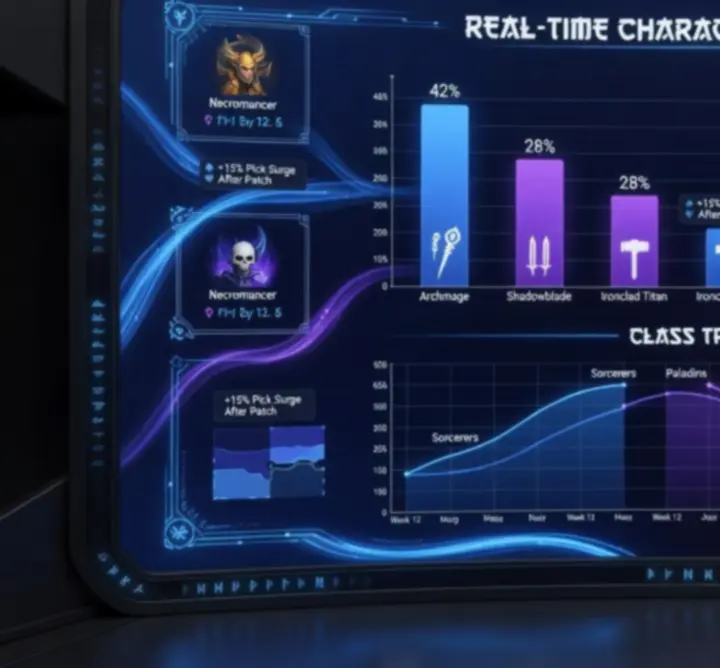
This snapshot summarises how TFT’s current set is being played across Hungary, from ranked queues to community events.

Top-Picked Frontlines

Defensive trait combinations with built-in sustain are dominating early and mid game. Flexible tanks that belong to multiple traits are prioritised for smoother transitions.

Carry Archetype Trends

Hungary players currently lean towards scaling backline carries over one-shot assassins, valuing consistency in long tournaments.

Support & Utility Usage

Meta data shows increasing reliance on supports that grant shields, armor, or mana — crucial tools in this multiplayer fantasy game environment where fights are often decided by a single spell cast.

Draft Win Rate Insights

Comps that maintain two tanks, one main carry, one secondary carry and at least one strong support report the highest top-4 and lobby-win rates.

Visual Tier Lists

Visual Tier Lists by Role & Performance

Tier lists change each patch, but our framework helps you interpret them quickly and apply them to your own drafting decisions.

Role-Based Tiers

Instead of treating tiers as static rankings, read them role by role:

  • S-tier tanks: can solo-anchor a frontline with the right items.
  • A-tier damage dealers: strong but may require more specific items.
  • B-tier supports: solid trait fillers that shine in the right comp.

Draft Context Matters

The same champion can jump from B-tier to S-tier depending on:

  • Your existing traits and open synergies.
  • Item components already in your inventory.
  • How heavily the lobby is contesting similar boards.

From Lists to Wins

Use tier lists as guidance, not absolute rules. Strong drafters:

  • Know when to pivot into off-meta but synergistic comps.
  • Play lower-tier picks when they complete traits or upgrade faster.
  • Exploit opponents who blindly force only S-tier strategies.
View Tier-Based Draft Guides

Gallery of Legendary Skins

Legendary Skins – Visual Mastery & Fantasy Identity

While cosmetics don’t change TFT balance, they do power up your esports-inspired identity and highlight your mastery of specific champions and comps.

Why Skins Matter for Draft Depth

Legendary skins in TFT and its connected ecosystem reinforce champion identity. Most high-level Hungary players naturally specialise in a small pool of favourite archetypes; investing in matching skins helps you:

  • Keep focus during long competitive sessions.
  • Instantly recognise key units on a crowded board.
  • Express your unique approach to fantasy strategy game drafting.

Draft Depth does not sell skins or game access; we simply celebrate them as part of the wider multiplayer fantasy game culture.